

The landscape of rapid app development has fundamentally shifted. Software development is moving from syntax-heavy manual coding to intent-driven architecture, it’s a shift known as “vibe coding.” By trusting gen AI to handle code creation from natural language prompts, founders can now bring products to market at a fraction of traditional development timelines.
According to McKinsey, generative AI could add up to $4.4 trillion in annual productivity across industries, with software engineering seeing some of the most immediate gains. Three platforms lead this shift: Lovable, Bolt and Replit. (Each offers a distinct approach to AI-assisted development.)
However, maximizing these tools requires a clear framework of when vibe coding works and when it doesn’t. While sometimes non-technical founders can build simple prototypes solo, scaling an AI-generated codebase into a robust, investor-ready product requires a structured approach. Enterprise-grade execution demands specialized vibe coding agency that provide engineering oversight, helping teams select the right tech stack and safely transition from initial prompts to a secure, stable production application.
Technical Comparison: Architecture and Reality
Choosing the wrong platform early can result in technical debt or a complete structural dead end. The three platforms handle code visibility, backend state, and autonomous execution differently.
| Feature | Lovable | Bolt.new | Replit |
| Core Philosophy | AI-first full-stack web application builder. | Full-stack web environment running entirely in the browser. | Autonomous workspace driven by an AI Agent. |
| Interface & Control | Chat-based canvas; users prompt directly against the UI. | Full-stack WebContainers with a side-by-side terminal, code view, and preview. | Full cloud IDE featuring a collaborative canvas and deployable sandboxes. |
| Code Visibility | Highly visible; full access to edit underlying files directly. | Transparent, open-source file tree access within the browser. | Absolute control; production-grade IDE with Git and database integrations. |
| Backend Integration | Native, deep synchronization with Supabase for data and auth. | Flexible; supports Node.js, databases, auth, and external APIs natively. | Built-in Replit Postgres, object storage, and unrestricted backend capabilities. |
| Language & Tech Stack | Restricted to React, Vite, Tailwind CSS, and TypeScript. | Multitude of web frameworks (Next.js, Remix, Vite, Vue, Node.js). | Unrestricted; 50+ languages supported (Python, Go, Node.js, etc.). |
| Deployment Model | One-click production deployment via Netlify. | Managed deployment to Netlify or Vercel; full code export. | Integrated cloud hosting with managed deployments or custom domain routing. |
| Pricing Structure | Free tier available. Paid plans start at $25/month. | Free tier available. Paid plans start at $25/month for Pro. | Free tier available. Core plan starts at $20/month; Pro starts at $100/month. |
Platform Deep Dive: Strengths and Constraints
Lovable: The Premium Full-Stack Accelerator
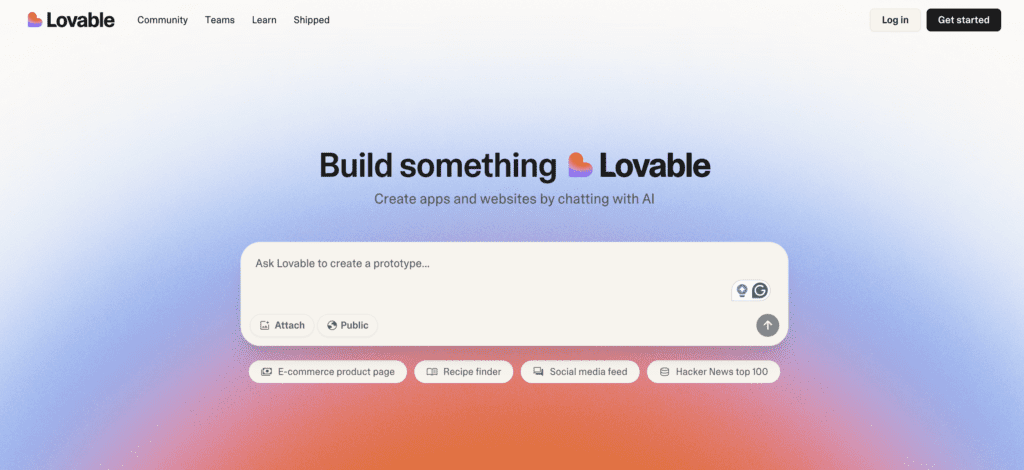
Lovable turns natural language descriptions into highly polished web apps, unlike basic no-code tools, Lovable generates clean, production-grade React and TypeScript code, meaning developers are never locked into a proprietary ecosystem.
- The Strengths: It excels at building beautiful user interfaces and syncing them instantly with Supabase for backend database management and authentication. For founders needing a functional, pixel-perfect MVP to present to investors within days, Lovable is highly efficient.
- The Constraints: It is strictly constrained to web applications. If your project requires native mobile architecture or complex data processing pipelines outside of web tech stacks, Lovable is not the correct tool, and as an app grows complex, poorly structured natural language prompts can introduce logic regressions.
Bolt.new: Full-Stack WebContainer Flexibility
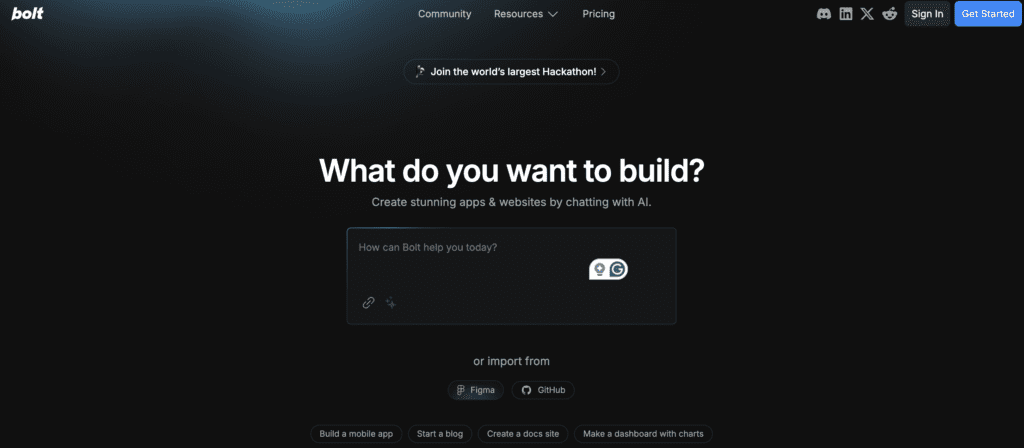
Developed by StackBlitz, Bolt runs entirely inside the browser using WebContainer technology. It allows users to spin up full-stack Node.js environments, install npm packages, run servers, and execute terminal commands through a conversational AI interface.
- The Strengths: Bolt is framework-agnostic where you are not trapped in a single ecosystem; you can build with Next.js, Remix, Vue, or Angular. It allows engineers to install enterprise integrations (like payment processors or CRM APIs) entirely through natural language prompts while maintaining direct terminal access.
- The Constraints: Because it executes full-stack environments within a browser tab, heavy applications can stress system memory. Also, while its code architecture is transparent, it lacks the broader DevOps and system-level configuration capabilities found in dedicated cloud environments.
Replit: The Autonomous Multi-Language Workspace
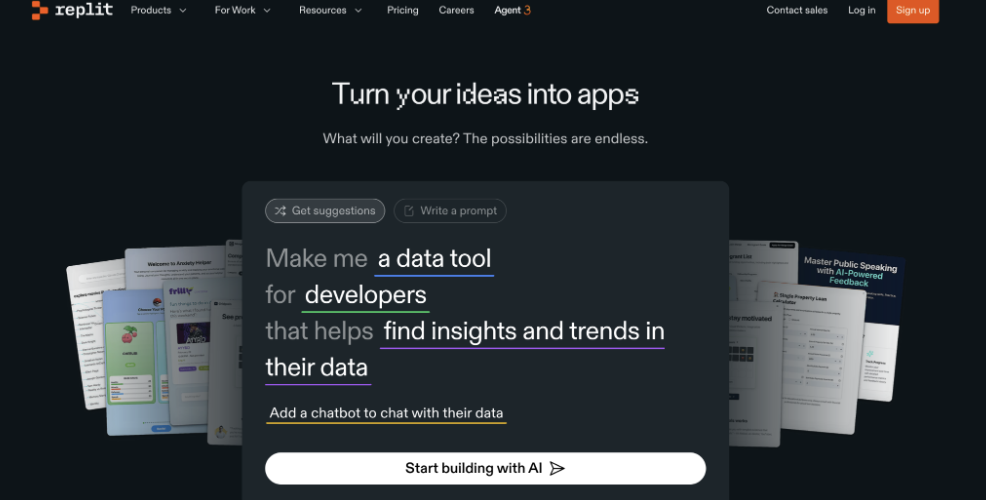
Replit is a cloud-native development platform powered by Replit Agent. This specialized AI coding agent functions as an autonomous engine capable of building full-stack applications from scratch, provisioning databases, configuring server environments, and deploying live software.
- The Strengths: Replit is highly flexible regarding language support. If your product involves heavy data science (Python), concurrent microservices (Go), or deep system integrations, Replit handles it natively. Replit Agent does not just write code; it reasons through execution errors, installs system dependencies, manages deployments, and handles background tasks autonomously.
- The Constraints: The learning curve is steeper than Lovable or Bolt. While Replit Agent can build software autonomously, managing its output requires a clear understanding of software architecture. If prompts are poorly defined, the agent can consume computational credits trying to debug complex logic loops.
Infrastructure, Scalability, and the Vibe Coding Trap
A common pitfall for founders using these tools is hitting a “complexity wall.” AI agents are exceptional at scaffolding applications from zero to 80%. The final 20% which includes securing user data, optimizing API performance, integrating complex business logic, and establishing scalable cloud infrastructure requires strict architectural discipline.
For instance, while launching an MVP on Lovable’s managed Netlify pipeline is simple, transitioning from a prototype to a production-ready product to handle enterprise-grade compliance or complex third-party data pipelines requires expert manual refactoring.
Vibe coding is not about eliminating engineers; it is about changing their role from manual typists to strategic software architects. Navigating these platforms requires an active understanding of where AI execution finishes and senior engineering design begins.
Which Vibe Coding Tool Fits Your MVP?
Your selection should align with your product’s technical requirements and long-term scaling strategy:
- Choose Lovable if you are building a web-based SaaS, a data-driven dashboard, or a client portal that requires an exceptional UI and deep integration with a backend like Supabase. It is the fastest route to a polished prototype.
- Choose Bolt if you need a full-stack web application but require specific framework flexibility (such as Next.js or Node.js backends) and direct control over the file tree and terminal environment from day one.
- Choose Replit if your product requires non-JavaScript languages, intensive data pipelines, autonomous background workers, or complex cloud-native architectures driven by an autonomous AI agent.
Beyond the AI Prompt: Professional Execution
AI development tools lower the barrier to entry, but building an enterprise-grade product still requires technical strategy. If you are struggling to identify which vibe coding tool fits your scope, Vibe Coding by Scopic can consult on your product requirements, assist in making the right platform choices, and guide your development from the very first prompt to production deployment.
Ready to build your next MVP? Contact us to get started.