If you’ve spent any time around AI-assisted development lately, you’ve probably heard both terms thrown around like they mean the same thing. They don’t, and the difference matters more than it might seem.
What Is Vibe Coding?Vibe Engineering vs. Vibe Coding: What’s the Difference?
You’ve probably heard both terms lately. They sound alike, but they don’t mean the same thing. The difference matters more than it might seem.
What Is Vibe Coding?
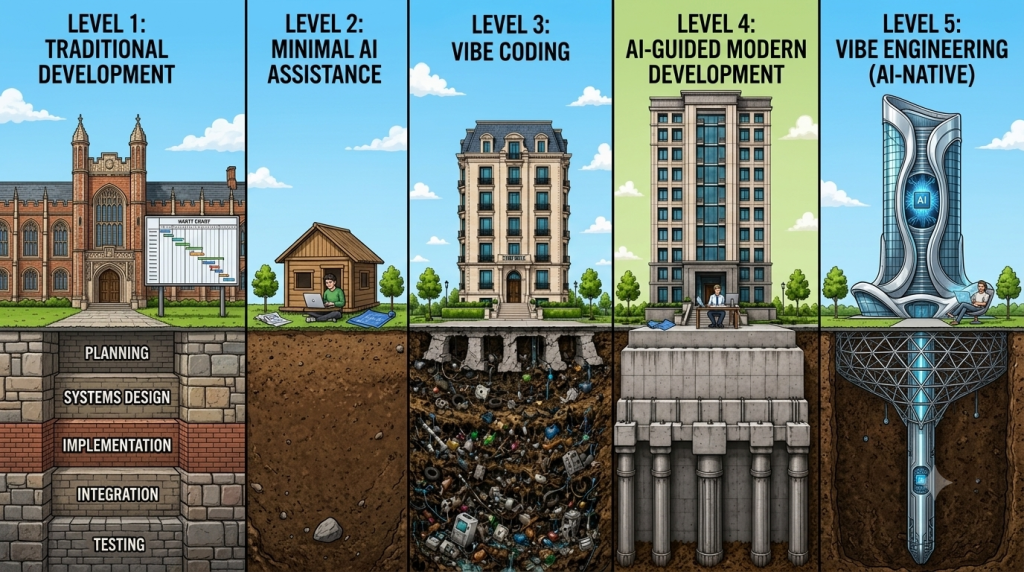
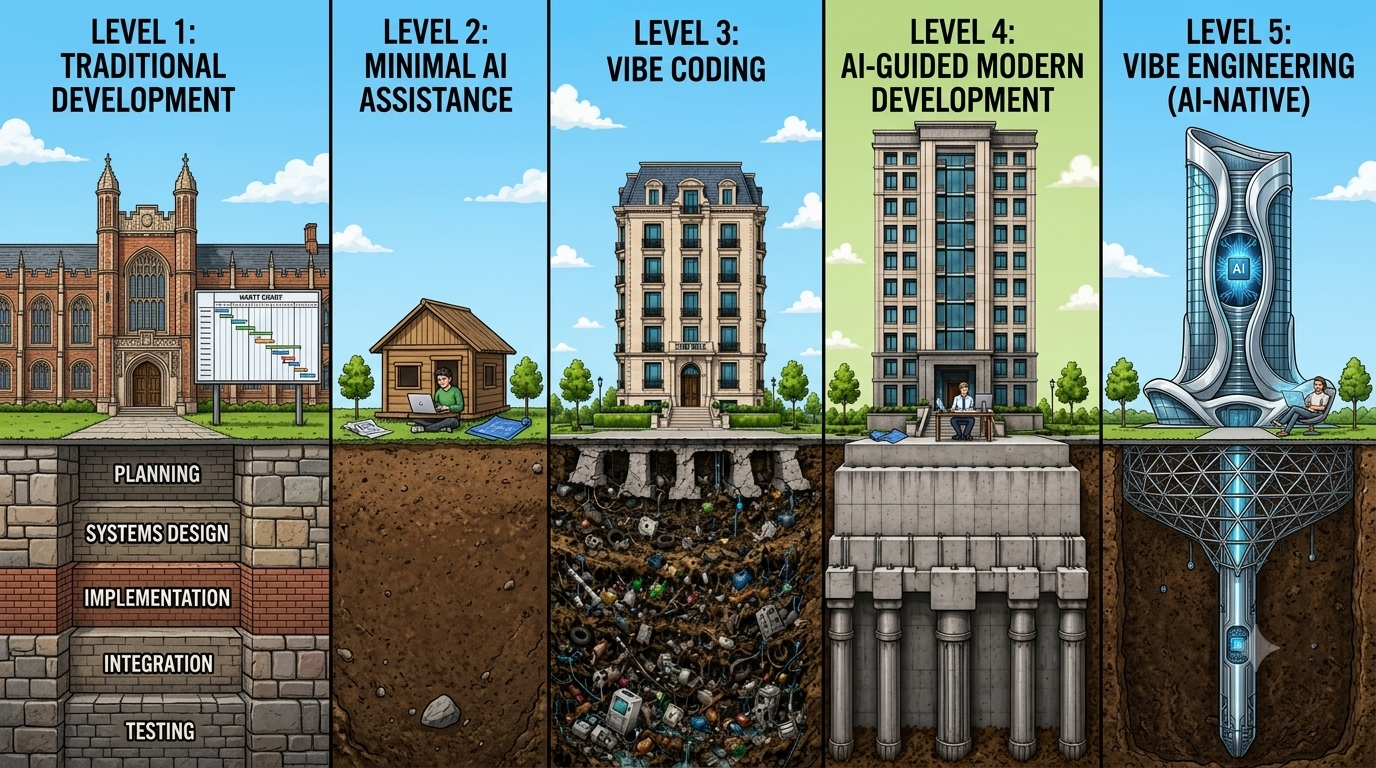
AI researcher Andrej Karpathy coined “vibe coding” in early 2025. It describes a simple loop: you prompt an AI in plain language, and it writes the code. You accept what comes back, often without inspecting it closely. The developer describes what they want. The AI generates it. The loop repeats.
Yes, it’s fast. It’s accessible to non-engineers. It’s genuinely useful for prototypes, demos, and throwaway experiments.
But there’s a tradeoff. Vibe coding treats the AI’s output as final. There’s no architectural review. There’s no systematic testing. Often, there’s no real understanding of what the generated code is actually doing. That’s fine for a weekend project. It’s a liability for anything a business plans to run, scale, or hand to real users.
What Is Vibe Engineering?
Vibe engineering starts the same way: AI agents generate the code. But it adds the discipline that vibe coding skips. So think of the AI as a fast, capable junior developer. It can produce a lot of code quickly. But that work still needs architectural oversight, careful review, and continuous testing before it ships.
In practice, that means:
- Architecture first. A system architect defines how the pieces fit together before AI starts generating code. The result is a coherent system, not a pile of disconnected features.
- Human review of every output. Experienced engineers read, question, and refine what the AI produces. Nothing gets merged on faith.
- Testing as a standard step. QA verifies the code works under real conditions, not just in the demo.
The result can look similar on the surface: working software, built fast, with AI doing a lot of the heavy lifting. But it’s built to hold up in production. It’s not just built to look good in a pitch.
Why the Distinction Matters
Vibe coding and vibe engineering aren’t opposing philosophies. Vibe engineering is what happens when you take vibe coding’s speed and add professional guardrails. Skip the guardrails, and you get a prototype: fast to build, risky to rely on. Add them, and you get a product: still fast, but built to actually work when it matters.
This is a real decision for anyone planning their next MVP, internal tool, or customer-facing product. Most teams already use AI in development. The real question is different: has the resulting code been engineered, or just generated?
How Scopic Approaches It
Every project at Scopic is held to this standard. Of course, we use AI tools the way vibe coding intends: fast, natural-language-driven development that gets from idea to working code quickly. But nothing ships without the vibe engineering layer on top. System architects design the solution up front. Then, engineers review and refine every AI-generated output. QA checks for production-level quality before delivery.
Vibe coding gets you a prototype. Vibe engineering gets you a product.
If you’re weighing whether your next build needs one or the other, or both, reach out to our team to talk through what that looks like for your project.